


How Much Does It Cost to Renovate a House in Malaysia?
A Practical Budget Guide
Renovation costs in Malaysia can range from a relatively small refresh to several hundred thousand ringgit for a fully customised home.
The important question is not simply “How much is renovation per square foot?”
A more useful question is:
“What level of renovation do I want, what needs to be changed, and how should my budget be allocated?”
For homeowners in Johor Bahru (JB) and Kuala Lumpur (KL), the answer can vary significantly depending on the property type, existing condition, layout changes, carpentry, materials, electrical and plumbing works, and the level of customisation required.
At DAA Design Associates, residential design and renovation projects generally start from around RM300,000 and above, with typical budget ranges structured around the scale and complexity of the project.
This guide explains how to think about renovation costs before you start collecting quotations.
How Much Should You Budget for a House Renovation in Malaysia?
There is no single renovation price that applies to every Malaysian home.
As a general market reference, recent Malaysian renovation guides show that renovation budgets can range from tens of thousands of ringgit for basic work to RM200,000–RM500,000+ for more extensive or premium residential renovations. The ranges vary considerably because different guides define “full renovation” differently.
This is exactly why a simple RM/sqft calculation can be misleading.
For example, two 2,000 sqft houses could have completely different renovation costs:
- House A keeps the existing layout and flooring.
- House B removes the flooring, changes the kitchen layout, upgrades electrical wiring, renovates bathrooms and adds extensive custom carpentry.
They have the same built-up area, but they are completely different projects.
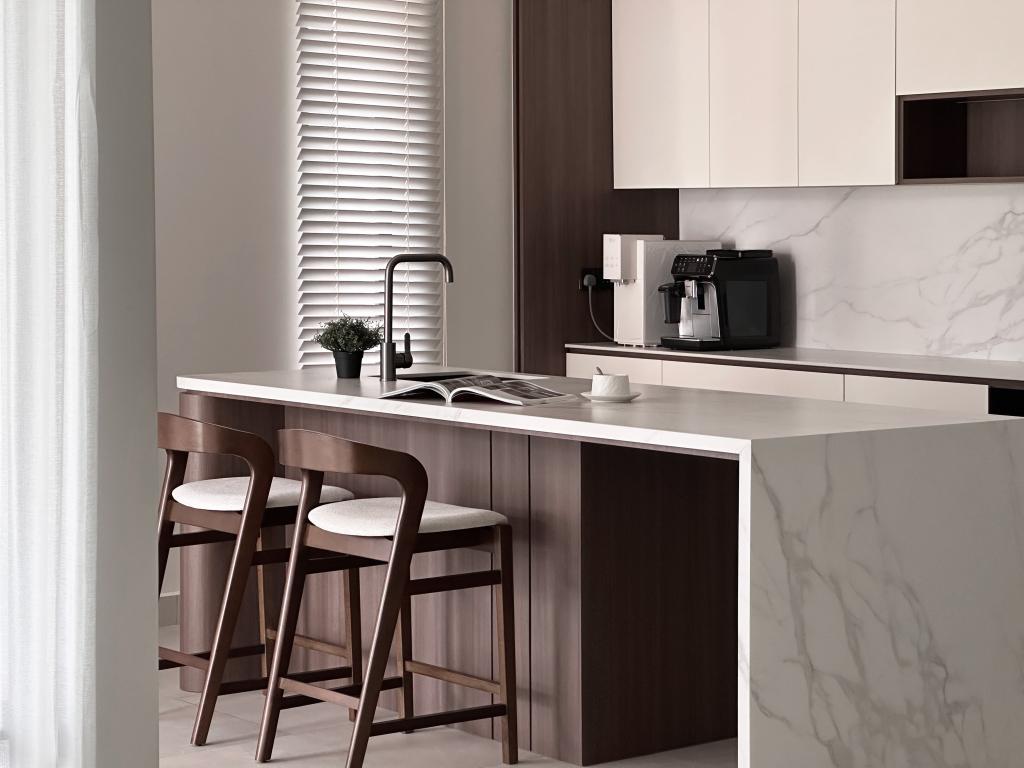
Credit : DAA Project – Soft Grain
DAA’s Residential Budget Reference
For homeowners considering a more comprehensive design and renovation service, DAA currently uses the following budget ranges as an initial planning reference:
| Estimated Budget | Typical Project Direction |
|---|---|
| RM300k – RM400k | Typical double-storey homes, minor extensions or resale-home renovation |
| RM400k – RM500k | Larger homes, more extensive extensions or structural works |
| RM500k – RM1 million | Major extensions or highly customised residential renovation |
| Above RM1 million | Large-scale or bespoke residential projects |
These figures are planning ranges, not fixed quotations. The final project budget is determined only after understanding the property, scope, design requirements and material selections.
Landed House vs Condo: Does Property Type Affect Renovation Cost?
Yes.
A landed house and a condominium may have the same built-up area but require very different renovation planning.
Landed House Renovation
Landed properties generally offer more flexibility for renovation, but they can also involve more extensive construction work.
Depending on the property, homeowners may need to consider:
- Extension works
- Roofing
- External works
- Plumbing upgrades
- Electrical rewiring
- New flooring
- Staircase modifications
- Kitchen extensions
- Structural changes
- Larger amounts of custom carpentry
Older resale houses can also reveal additional work after demolition begins.
For this reason, a landed renovation budget should not be based only on the house size.
Condo Renovation
Condo renovation comes with a different set of considerations.
Apart from design and construction costs, homeowners may need to consider building management requirements, renovation deposits, working-hour restrictions, hacking rules, debris disposal and approval procedures.
Recent 2026 market guides for Klang Valley show that condo renovation budgets vary widely depending on size and scope, with premium or designer fit-outs reaching significantly higher levels than basic refreshes.
For condos, what you are allowed to change can be just as important as what you want to change.
What Factors Affect Renovation Cost?
The total cost of a renovation is usually influenced by several factors working together.
1. Property Size
A larger home generally requires more flooring, ceiling, painting, lighting, carpentry and other finishes.
However, size alone does not determine the budget.
A 1,500 sqft highly customised home can cost more than a 2,500 sqft home with a simpler scope.
2. Existing Condition
A new property and an older resale property can have very different starting points.
Older homes may require:
- Electrical rewiring
- Plumbing replacement
- Waterproofing
- Hacking
- Replastering
- Tile replacement
- Roof repairs
- Structural repairs
These works can significantly change the renovation budget.
3. Layout Changes
Keeping the existing layout is generally more predictable.
Moving kitchens, bathrooms, walls, plumbing points or electrical systems introduces additional work and coordination.
The more fundamental the layout changes, the more important proper planning becomes before construction starts.
4. Carpentry
Custom carpentry is often one of the largest components of a residential renovation budget.
This may include:
- Kitchen cabinets
- Wardrobes
- TV consoles
- Feature cabinets
- Shoe cabinets
- Display units
- Study areas
- Storage systems
- Custom furniture
The cost depends on the amount of carpentry, dimensions, internal configuration, hardware, finishing and level of customisation.
5. Material Selection
Two homes can have the same design but very different costs because of material choices.
Examples include:
- Natural stone vs engineered stone
- Standard tiles vs large-format tiles
- Laminate vs veneer
- Standard sanitary fittings vs premium fittings
- Basic lighting vs customised lighting
- Standard doors vs customised doors
The question is therefore not simply “How much does a kitchen cost?”
It is:
“What kitchen are we trying to create, and what materials and functions does it require?”
6. Design Complexity
A simple space with straightforward details is easier to build than a highly customised interior with curves, concealed doors, special lighting, integrated furniture and complex detailing.
Design decisions have construction consequences.
That is why design and budget should be planned together rather than separately.
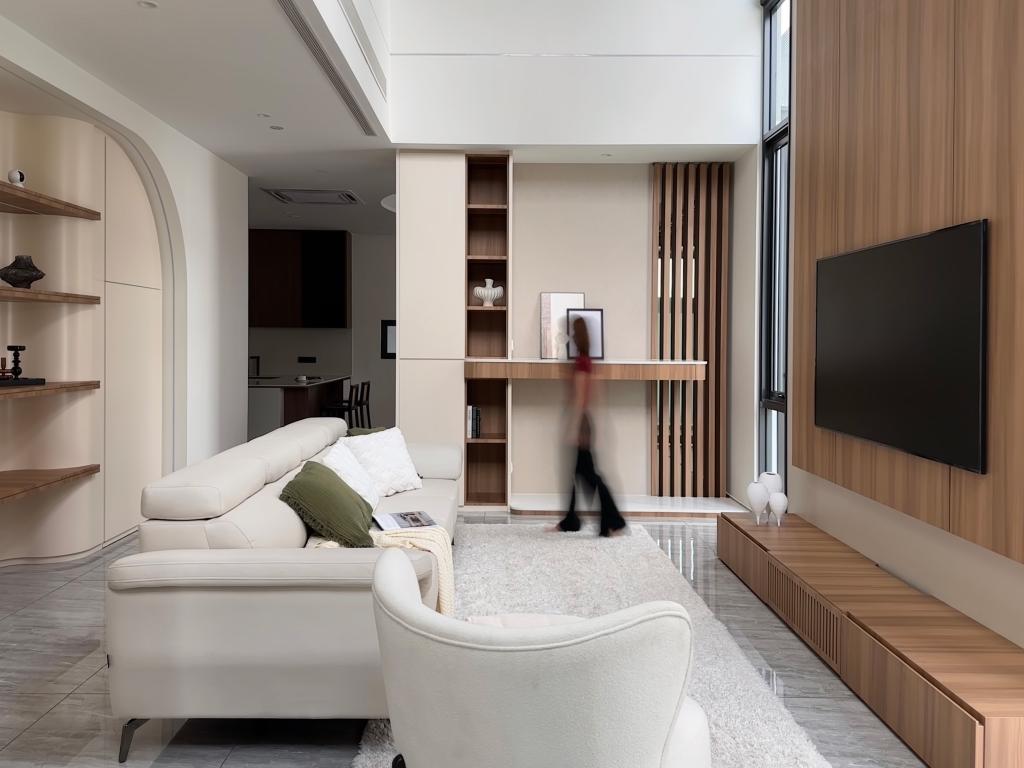
Credit : DAA Project – Refined Living
How Should You Divide Your Renovation Budget?
Instead of assigning an arbitrary amount to every room, DAA recommends looking at the renovation as a combination of scope, priorities and investment levels.
A practical budget structure should consider:
1. Construction & Existing-Condition Works
This includes the work required to prepare or transform the existing space:
- Hacking
- Demolition
- Masonry
- Plumbing
- Electrical
- Waterproofing
- Flooring
- Ceiling
- Painting
- Other essential site works
2. Custom Carpentry
This is usually one of the most important areas to control because the amount of cabinetry can grow quickly during the design process.
Decide early:
What needs to be built in, and what can remain loose?
Not every wall needs a cabinet.
3. Kitchen & Bathrooms
These spaces involve multiple trades and materials.
A kitchen may involve:
- Cabinetry
- Countertop
- Sink
- Plumbing
- Electrical points
- Appliances
- Backsplash
- Lighting
Bathrooms may involve:
- Hacking
- Waterproofing
- Tiles
- Plumbing
- Sanitary fittings
- Shower systems
- Glass works
- Lighting
This is why kitchen and bathroom costs should be planned as complete systems rather than individual products.
4. Lighting & Electrical
Lighting is often underestimated during the early budgeting stage.
A renovation may require:
- Additional power points
- Lighting points
- Decorative lighting
- Feature lighting
- Concealed lighting
- Smart-home wiring
- DB or wiring upgrades
The lighting plan should be developed together with the interior design rather than added at the end.
5. Loose Furniture & Soft Furnishing
Depending on the project scope, the total investment may also include:
- Sofa
- Dining table
- Dining chairs
- Beds
- Curtains
- Rugs
- Decorative lighting
- Artwork
- Accessories
These items can significantly affect the final appearance of a home, so they should not be forgotten when setting the overall budget.
How Much Should You Allocate to Carpentry?
There is no universal percentage that works for every home.
The right amount depends on how much storage you need and how customised the interior is.
For example, a homeowner who wants:
- Full-height wardrobes
- A large kitchen
- Multiple display cabinets
- A feature TV wall
- A home office
- Extensive hidden storage
will naturally spend much more on carpentry than someone who prefers open space and loose furniture.
The better approach is to determine your storage requirements first, then design the carpentry around them.
This prevents a common problem:
spending too much on cabinets that look good but are not actually needed.
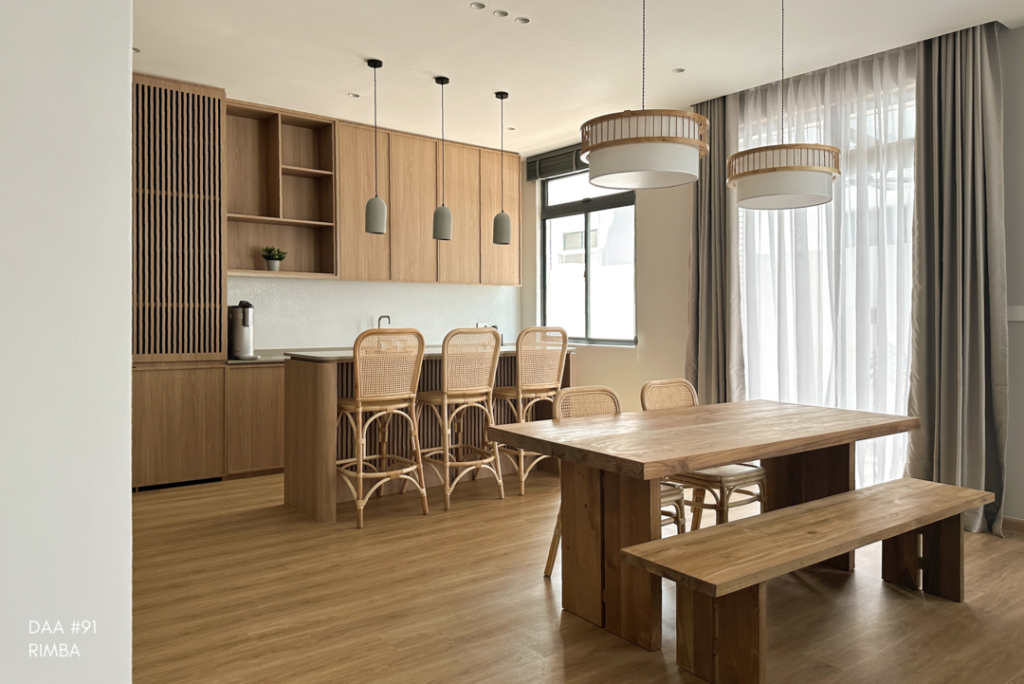
Credit : DAA Project – Tranquil Simplicity
What Are Usually the Most Expensive Parts of a Renovation?
For many residential projects, the biggest cost drivers tend to be:
- Custom carpentry
- Kitchen
- Major hacking and rebuilding
- Extensions or structural works
- Flooring and large-format or premium materials
- Electrical and lighting upgrades
- Bathrooms and waterproofing
- Specialised finishes and customised details
The order changes from project to project.
For example, a house with a major extension may spend heavily on construction, while a highly customised condo may allocate a much larger portion to carpentry and finishes.
How Much Contingency Should You Keep?
A renovation budget should not be planned down to the last ringgit.
Unexpected conditions can appear during renovation, especially in older properties.
Examples include:
- Hidden plumbing issues
- Existing wiring problems
- Uneven surfaces
- Water leakage
- Additional repair work
- Changes requested during construction
- Material upgrades
CIDB’s homeowner guidance recommends allowing approximately 5%–15% contingency for unexpected costs, depending on the project.
For a major renovation, having this reserve is particularly important.
A budget of RM300,000 does not necessarily mean you should plan to spend exactly RM300,000.
It is safer to distinguish between:
Renovation Budget + Contingency Reserve
rather than treating the entire amount as available for design upgrades.
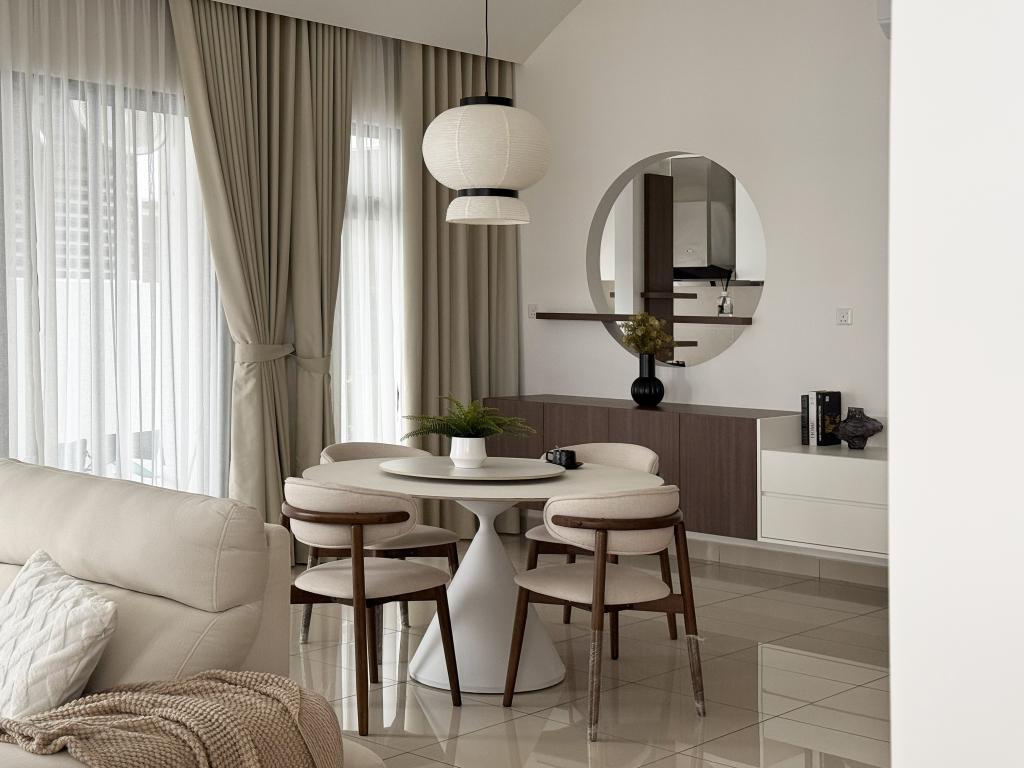
Credit : DAA Project – Warm Neutrals
Why Can Two Houses of Similar Size Have Very Different Renovation Costs?
This is one of the most important things homeowners should understand.
Built-up area is only one variable.
Consider two 2,000 sqft landed homes.
Home A
- Existing layout retained
- Existing flooring retained
- Limited carpentry
- Standard kitchen
- Minor electrical works
- Minimal hacking
Home B
- New spatial planning
- Kitchen relocated
- Multiple bathrooms renovated
- New flooring throughout
- Full-height carpentry
- Hidden doors
- Feature ceilings
- Custom lighting
- Extension works
- Premium materials
Both homes are 2,000 sqft.
But their renovation requirements are completely different.
This is why RM/sqft should be used as a rough reference, not as the final method for determining a renovation budget.
Does a Bigger Budget Always Mean Better Design?
No.
A bigger budget gives a designer more possibilities, but it does not automatically create a better home.
Good design is about allocating money to the areas that have the greatest impact on:
- Function
- Comfort
- Durability
- Visual balance
- Daily experience
- Long-term value
For example, spending more on a high-quality kitchen may make more sense for a homeowner who cooks every day.
Another homeowner may benefit more from better lighting, acoustic treatment, storage or a comfortable living area.
The best renovation budget is not necessarily the biggest one. It is the one that reflects how you actually live.
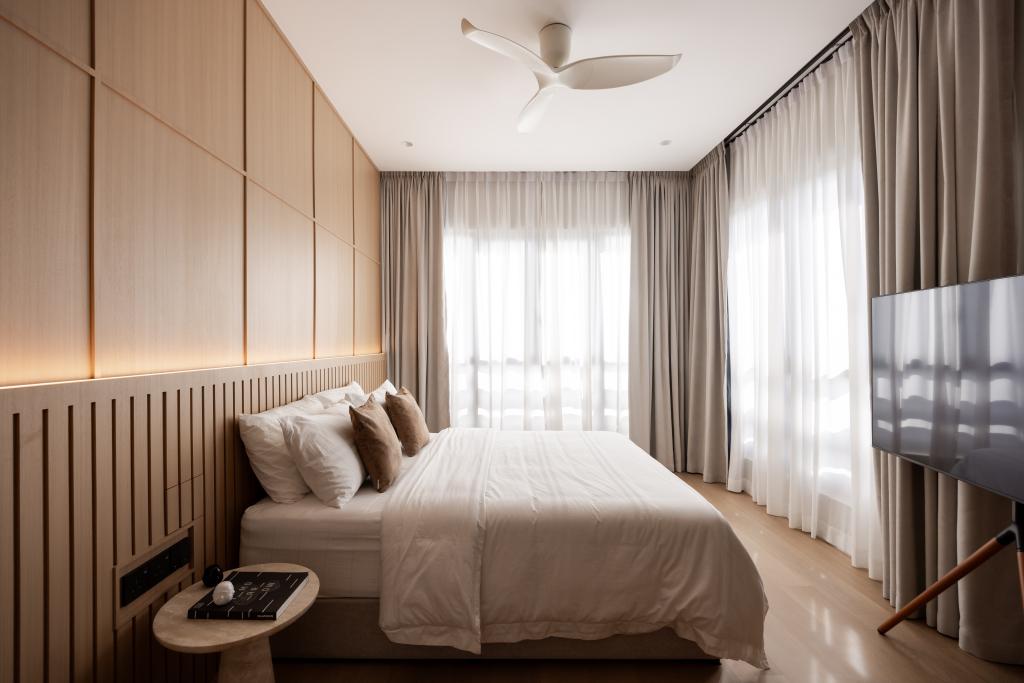
Credit : DAA Project – Wooden Light
Where Should You Spend More Money?
DAA generally recommends prioritising elements that are difficult or expensive to change later.
These may include:
Spend more on
- Space planning
- Electrical and lighting infrastructure
- Waterproofing
- Plumbing
- Kitchen functionality
- Quality hardware
- Frequently used carpentry
- High-use materials
- Workmanship
- Project coordination
These elements affect how the home performs over time.
Where Can You Save Without Compromising Quality?
Saving money does not always mean choosing the cheapest material.
You can often control renovation costs by making better design decisions.
Keep the existing layout where possible
Moving plumbing, electrical points and wet areas can create additional construction work.
Reduce unnecessary carpentry
Not every wall needs to become a storage cabinet.
Prioritise visible areas
Invest more in areas that you and your guests actually experience every day.
Choose materials strategically
Use premium materials where their appearance, durability or performance makes a meaningful difference.
Avoid unnecessary design changes during construction
Late changes can create additional labour, material and coordination costs.
Plan before construction starts
A detailed design and quotation makes it easier to understand where your money is going before work begins.
This is also where a proper project management system becomes important.
Why a Detailed Renovation Plan Matters
Renovation cost is not only about the final number on a quotation.
It is also about what that number actually includes.
A good renovation quotation should clearly communicate:
- Scope of work
- Materials
- Quantities
- Specifications
- Labour
- Project requirements
- Provisional sums where applicable
- Exclusions
- Timeline
- Payment structure
CIDB also highlights the importance of defining the scope accurately and distinguishing direct costs, indirect costs, provisional sums, prime cost sums and contingency when preparing a quotation.
At DAA, transparent quotation and explicit planning are part of the company’s project approach, together with project management, material control and master programme planning.
This allows the homeowner to understand not only how much the renovation costs, but also what they are paying for.
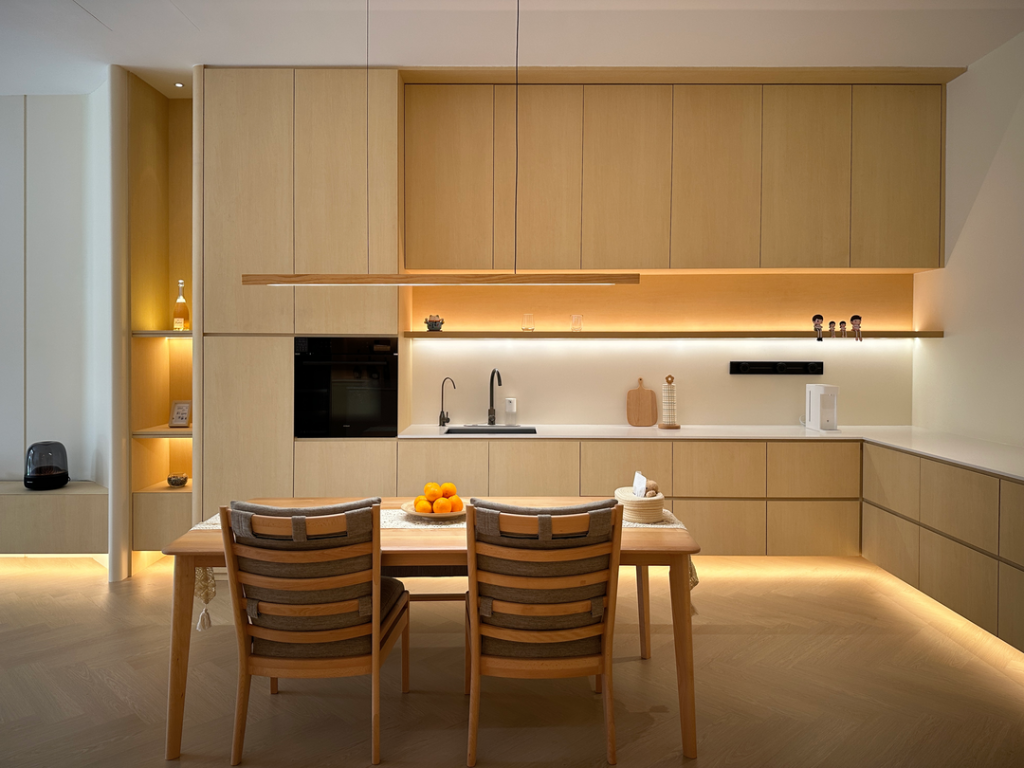
Credit : DAA Project – The Cream Hour
How DAA Approaches Renovation Budget Planning
DAA Design Associates is a one-stop interior design and renovation company based in Johor Bahru, providing design, space planning, renovation and related residential services.
Our approach starts with understanding the homeowner, property and intended lifestyle before determining the renovation scope.
The process typically considers:
Property → Existing Condition → Lifestyle → Space Planning → Design → Scope → Materials → Cost → Construction
This matters because budget should influence design decisions from the beginning.
A design that looks good on paper but cannot be built within the homeowner’s budget is not a practical design.
For homeowners planning a higher-budget residential renovation, DAA’s current budget reference starts from approximately RM300,000, with projects increasing according to the scale of extension, customisation, construction and design requirements.
DAA also has a residential portfolio covering landed and high-end residential projects across Malaysia, with projects ranging from individual residences to larger customised homes.
Renovation Budget FAQ
How much does it cost to renovate a house in Malaysia?
There is no fixed price. Basic renovation can cost tens of thousands of ringgit, while full residential renovations can reach RM200,000, RM300,000 or significantly more depending on scope, property condition, materials and customisation. For DAA’s comprehensive residential design and renovation projects, the current starting budget is around RM300,000.
How much does a landed house renovation cost?
The cost depends heavily on whether the project involves only interior renovation or also includes extension, structural, roofing, electrical, plumbing and other major works. A larger or highly customised landed renovation can easily require several hundred thousand ringgit.
How much does a condo renovation cost?
Condo renovation can range from a basic refresh to a premium designer fit-out. Recent Malaysian market guides show wide ranges depending on unit size, scope, materials and building restrictions.
How much should I keep for contingency?
A practical planning range is around 5%–15%, depending on the age, condition and complexity of the property.
What is usually the most expensive part of renovation?
There is no universal answer, but custom carpentry, kitchen works, major hacking/rebuilding, extensions and premium finishes are often significant cost drivers.
Should I use RM/sqft to calculate renovation cost?
Use it only as an initial benchmark. RM/sqft does not account properly for differences in layout, scope, carpentry, materials, existing condition or structural work.
Where should I spend more money?
Prioritise things that affect daily use and are difficult to change later, such as space planning, electrical infrastructure, plumbing, waterproofing, kitchen functionality, carpentry hardware, workmanship and project coordination.
Does a higher renovation budget guarantee better design?
No. Good design comes from making the right decisions for the homeowner, not simply increasing the amount spent.
Final Thought: Start With the Budget, But Do Not Stop There
The purpose of a renovation budget is not to limit design.
It is to give the design a realistic direction.
Before you start collecting quotations, understand:
What do I want to change?
How do I want to live in the space?
Which areas matter most to me?
What level of finish do I expect?
How much can I realistically invest?
Once these questions are clear, your designer can make better decisions about layout, materials, carpentry, construction and priorities.
For homeowners looking for a professional one-stop interior design and renovation team in Johor Bahru or Kuala Lumpur, DAA Design Associates combines interior design, space planning, renovation, project coordination, material control and cost planning under one team.
The goal is not simply to spend more on renovation. It is to spend the right amount, on the right things, for the way you live.

